


CNN Editor And Author Is Tutor at April’s Southern France Retreat
Novelist, former White House correspondent, podcaster, writing coach and senior editor with CNN, including Emmy and Peabody winning ‘The Situation Room With Wolf Blitzer’ - it’s hard to find a tutor with more impressive credentials for any writing event.

Thus we’re delighted to announce award-winning author, John DeDakis will join us at our week-long South of France Writing Retreat in an historic chateau in mid-April.

Not only has John written six mystery-suspense-thriller novels, he’s also penned a memoir about his life as radio host, editor, author, writing tutor and many other personas.

During his long international media career, John has interviewed everyone from former US Presidents Jimmy Carter and Ronald Reagan to movie director, Alfred Hitchcock.
His vast experience as both tutor and lead speaker at literary festivals and writing workshops in the US and Europe is remarkable.
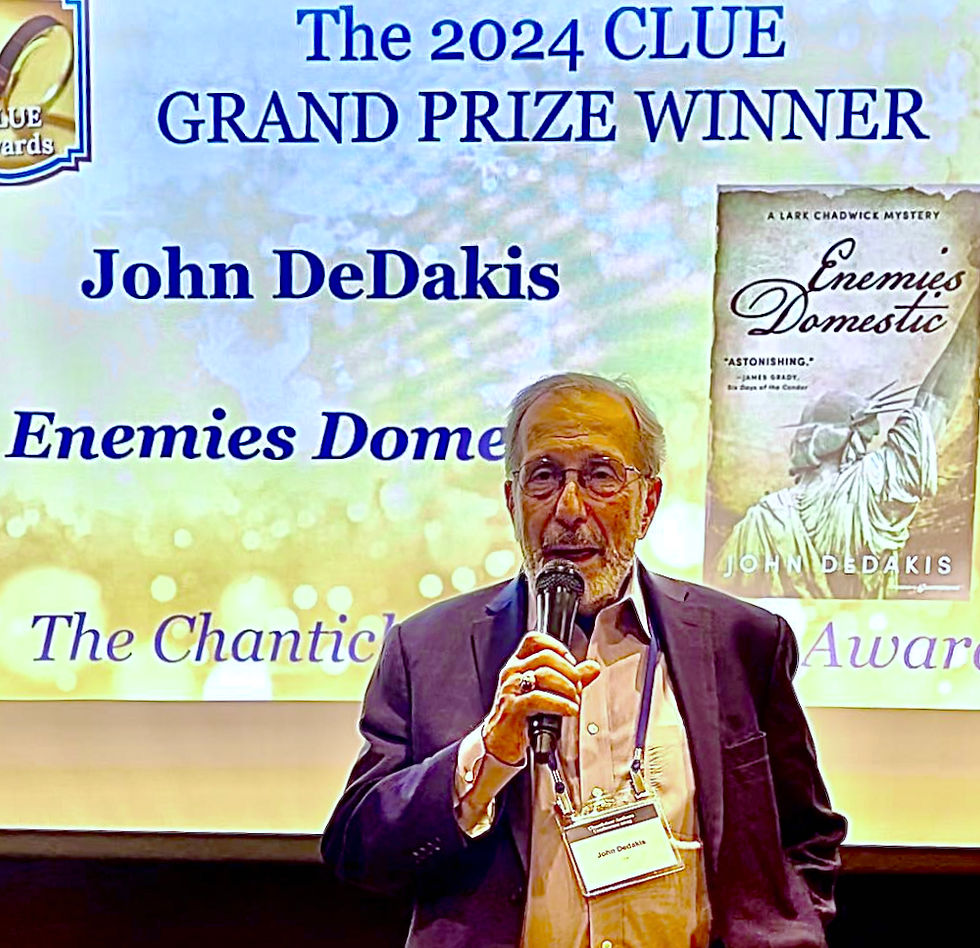
In his spare time, John - a member of Mystery Writers of America, Sisters in Crime, and International Thriller Writers - is a jazz and rock-and-roll drummer. With luck, participants to our upcoming French writing retreat - as well as enjoying not one but two exclusive live dance and music concerts in the chateau - may also hear John display his talent.

John will be joined as co-tutor at our South of France Writing Retreat by Sean Hillen, author and former foreign correspondent for The Times newspaper, London, The Irish Times, Dublin and Time magazine, New York, and former chairperson of a national Fulbright Commission, Sean's creative writing accomplishments include novel, memoir and novella genres. Our retreat will also feature a unique hands-on ‘Sensorial Writing' workshop hosted by Columbia Hillen, a Master Medical Herbalist and health magazine columnist.
If you are interested in joining us for a thoroughly absorbing experience in one of the most scenic regions of France, please don’t delay. We only accept a maximum of nine people.

To learn more about him, we interviewed John between speaking engagements.
Q: As journalist and senior CNN editor for 25 years, including ‘The Situation Room with Wolf Blitzer,’ how did that kind of work with words both help and hinder you in writing your novels?
A: It helped because journalism is deadline-driven. You don’t have the luxury of waiting for “the muse” to show up; you just have to write. And write tight. Efficiently. No wasted words. The hindrance is that, for the longest time, it was hard for me to make things up because in journalism, making things up is a firing offence.

Q: What were the biggest challenges you faced in your creative writing, especially thinking back to your first novel, Fast Track?
A: I didn’t have a clue how to write fiction, so the biggest challenge was not knowing what I didn’t know. It took me ten years to get an agent. I had to learn how to hook and hold a reader, how to market my work, how the publishing business works, and how to master the finer points of writing: point of view, dialogue, and showing rather than telling. Everything.
Q: How would you best describe your writing style?
A: Terse and to the point.
Q: What subjects do you like to tackle in your novels, and why?
A: Journalism, politics, grief and interpersonal relationships intrigue and animate me most, and they’re what I know best. I was a journalist for 45 years and covered the White House during Ronald Reagan’s presidency. Along the way, I lost my sister to suicide and my youngest son to a heroin overdose. Working through my personal experiences and issues in my writing is therapeutic and cathartic.

Q: Some of the participants at our writing retreats in Ireland and France are very interested in the genre of memoir. You have recently finished your first memoir entitled Plot Twists: A Memoir on Writing and Living. Many congratulations. What were the main difficulties in writing your memoir, and what strategy did you use to complete it? What was your blueprint plan from day one and did it change?
A: The hardest part was deciding what to cut. The first draft was a gargantuan 125,000 words. Based on candid feedback from beta readers, I ruthlessly whittled the manuscript down to a more readable 79,000 words. The creative strategy remained the same: identify the pivotal moments in my life that brought me to where I am today. I frequently refreshed my memory by consulting journals I’ve kept over the years.
Q: From Florida to Montana to Virginia, even to Dublin, your experience as a writing tutor and speaker is a formidable one. Name some of the conferences you have spoken at. And on what subjects?
A: I’ve spoken on the topic ‘Writing Through the Pain of Loss' at the International Dublin Writers’ Festival. I’m a regular presenter at the Killer Nashville Writers Conference, and for several years I’ve been teaching ‘From Novice to Novelist’ at the Chautauqua Institution in New York. I also teach online for various literary centers.
Q: What can participants expect from you as a writing tutor at our South of France Writing Retreat?
A: I strive to create a welcoming atmosphere and an enjoyable experience.
Q: What kind of approach do you find best for teaching creative writing?
A: It’s important to me that people feel free to ask questions about the creative process that vex them most. That lets me speak more directly to their needs. My classes are more like seminars. I’m also a firm believer that we learn to write by writing, so you can expect plenty of in-class writing exercises.

Q: Are there subjects you prefer teaching, and why?
A: I love to teach ‘How to Write a Novel’ because I deconstruct all the moving parts of creating—and selling—a novel. ‘How to Write a Key Scene’ is fun. Through a guided series of writing exercises, I take you from a blank page to a polished draft that’s ready to read to the room. ‘Writing to Heal’ and ‘Facing Your Writing Fears’ speak to the psychology of what it means to be a writer.
Q: What genre of writing do you prefer to read, and why?
A: My reading tastes are fairly eclectic, but the curious journalist in me gravitates toward non-fiction (biography/memoir) or historical fiction. I also love a good mystery or thriller.
Q: Name your top three books.
A: 'The Grapes of Wrath' by John Steinbeck
'Finding Meaning: The Sixth Stage' of Grief by David Kessler
'The Screwtape Letters' by C.S. Lewis


Comments